A guided stand test you can repeat at home
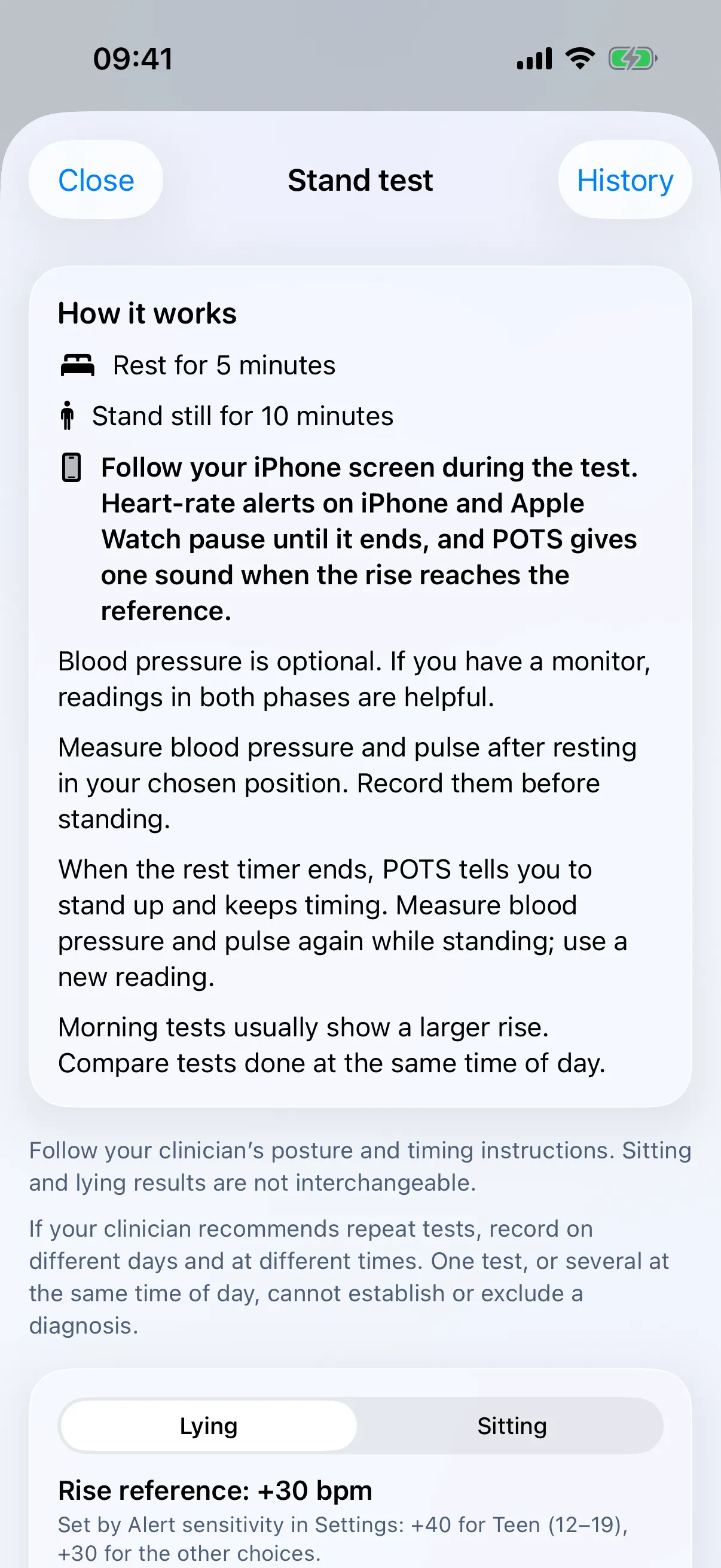
A stand test shows how your heart rate changes when you go from resting to standing. POTS guides each step, measures every minute and keeps every result so you can compare them over time.

What it does
- Rest, then stand
- Lying or sitting first, as your clinician advised, then standing still while POTS keeps time.
- Minute by minute
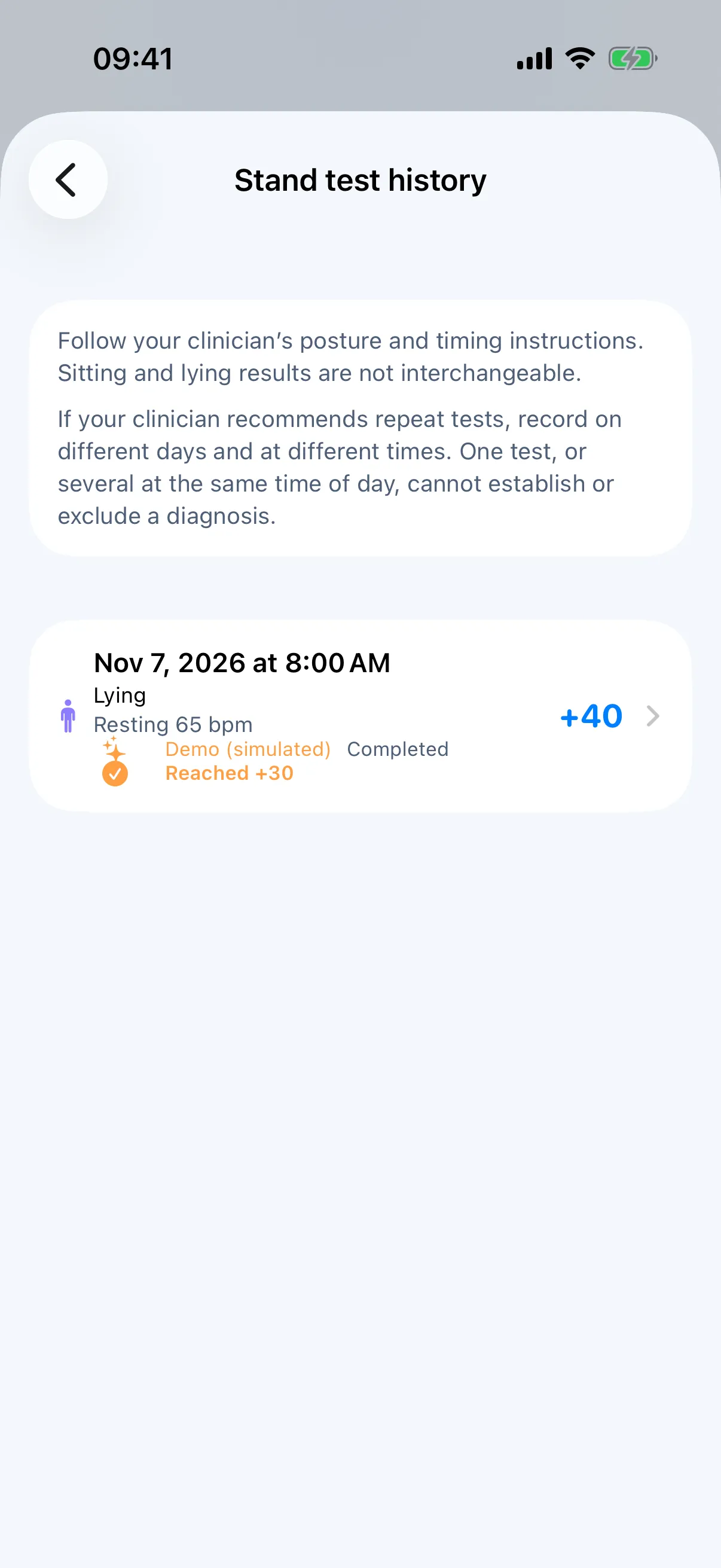
- Heart rate and change at 1, 2 and 5 minutes and the final minute.
- Blood pressure and symptoms
- Type in cuff readings if you have them and tap symptoms as they happen.
- A clear result
- The largest sustained rise of your 30-second average, compared with the +30 bpm reference (+40 for ages 12–19).
- Trend across tests
- Every test is saved. Compare them, with the time of day and how you slept the night before.
- Ready for the report
- Choose which stand tests go into your doctor report. Each gets its own page.
How to use it
Get ready
Wear your watch snugly or put on your strap. Have a chair, bed or wall close by, and someone with you if you might faint.
Rest
Lie down or sit quietly while POTS records your resting heart rate.
Stand
When POTS says so, stand up and stay still. Stop and sit or lie down if you feel faint.
Review
Read your result and find it again in Journal › Stand tests.
A home stand test is not a diagnosis. Follow your clinician’s instructions for posture and timing, and compare tests done at the same time of day.
Free and Premium. Free: one real stand test per day. Premium (including the free trial): no daily limit. Pricing
Questions
What does “Reached” mean in the result?
Your 30-second average stayed at or above the +30 bpm reference for at least 30 seconds (+40 for the Teen 12–19 setting). It is a measurement to discuss with your clinician, not a diagnosis.
Why test in the morning?
Morning tests often show a larger rise. Whatever time you choose, keep it the same so tests are comparable.
Bring the whole story to your next appointment.
Free to download. Premium from $2.99 a month, with a 7-day free trial for eligible new subscribers.